Wardrobe notes
Build a wardrobe around your actual week.
Forget the universal essentials list. Start with the places you go and the clothes that already earn their keep.
Let your calendar lead
A small wardrobe is not a competition to own the fewest pieces. It is a way to make the things you have easier to use. Before sorting hangers, write down a typical week: working from home, commuting, caring for family, meeting friends, exercising or going somewhere with a dress code. Include the weather and laundry rhythm. If most days are casual, your useful wardrobe may look very different from a list built around office tailoring.
Notice what is already working
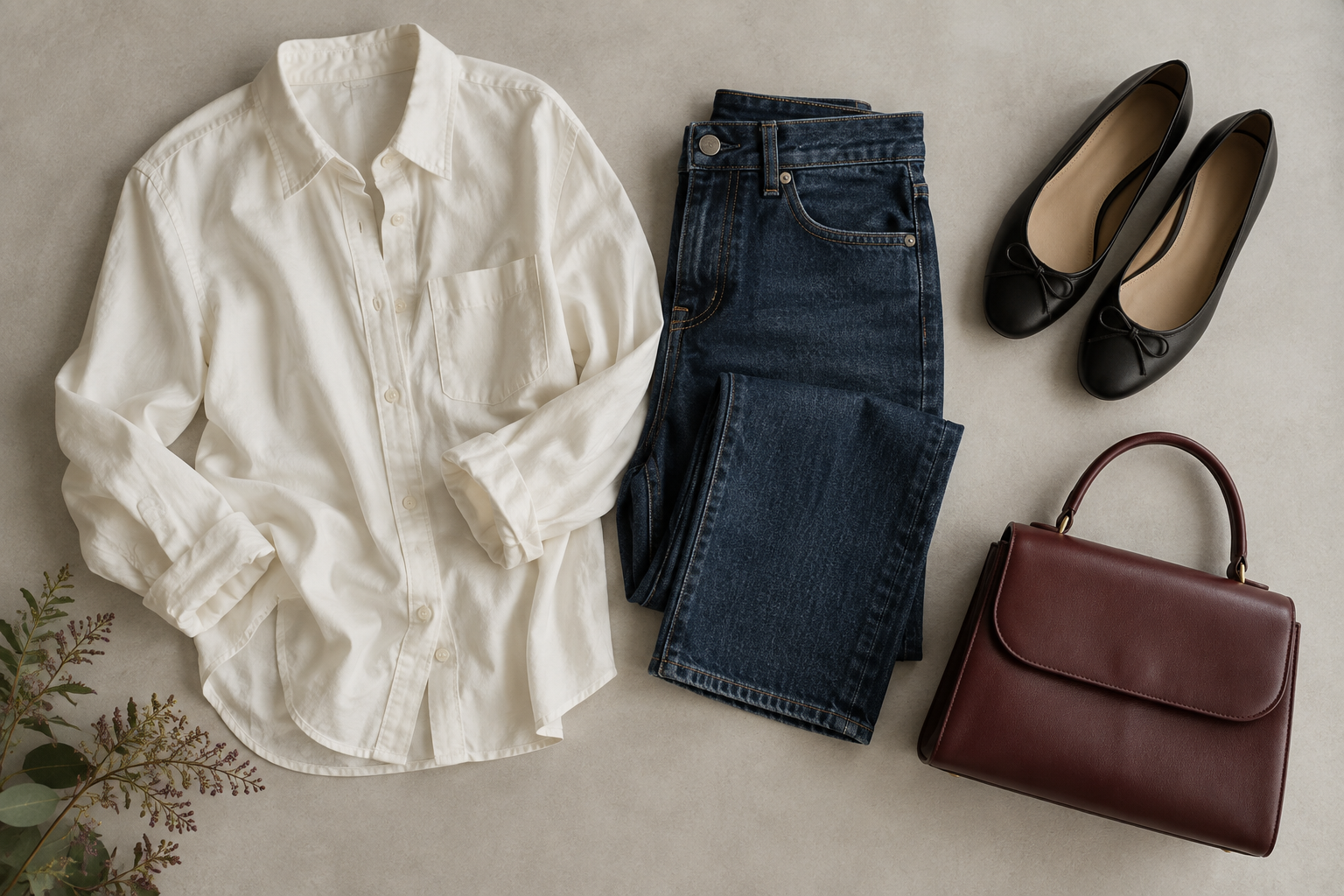
Pull out the pieces you reach for repeatedly. Ask why they work: the shape, the pockets, the fabric against your skin or the way they combine with several other things. These answers are more helpful than a rigid list of must-haves. Try a few complete outfits from this group. Include shoes, a practical bag and the layer you take outside. An outfit that only works without its coat may need another small adjustment.
Separate a gap from a styling problem
When something seems missing, describe the job before naming a product. Perhaps you need a layer that fits over a fuller sleeve, or shoes comfortable enough for a walk before dinner. First look for something you already own that could do that job. A shirt can sometimes serve as an open layer; a different tuck may make proportions easier. If you still want to buy something later, a specific purpose gives you a clearer starting point.
Make a small rotation
Choose a few outfits for the coming week and place their pieces where you can see them. This is a temporary experiment, not a permanent restriction. Leave room for an unexpected change of weather or plans. Keep a note of combinations that felt easy and pieces you kept putting back. A rarely worn item may need an alteration, another season or simply a different role. You do not have to make a disposal decision immediately.
Review after wearing, not just sorting
At the end of the week, look at what happened rather than what you intended. Were you reaching for the same jacket because it was useful, or because everything else was out of sight? Was an outfit comfortable for a full day? Adjust the rotation based on those answers. The result should make mornings less complicated and leave room for personal taste. There is no fixed number of clothes that makes a wardrobe right.
AI-assisted editorial article. Styling suggestions are subjective. Read our editorial policy.