Style details
Color, without overthinking it.
Choose a base, introduce a contrast and let your own preferences decide how far to take it.
Start with a pairing you already like
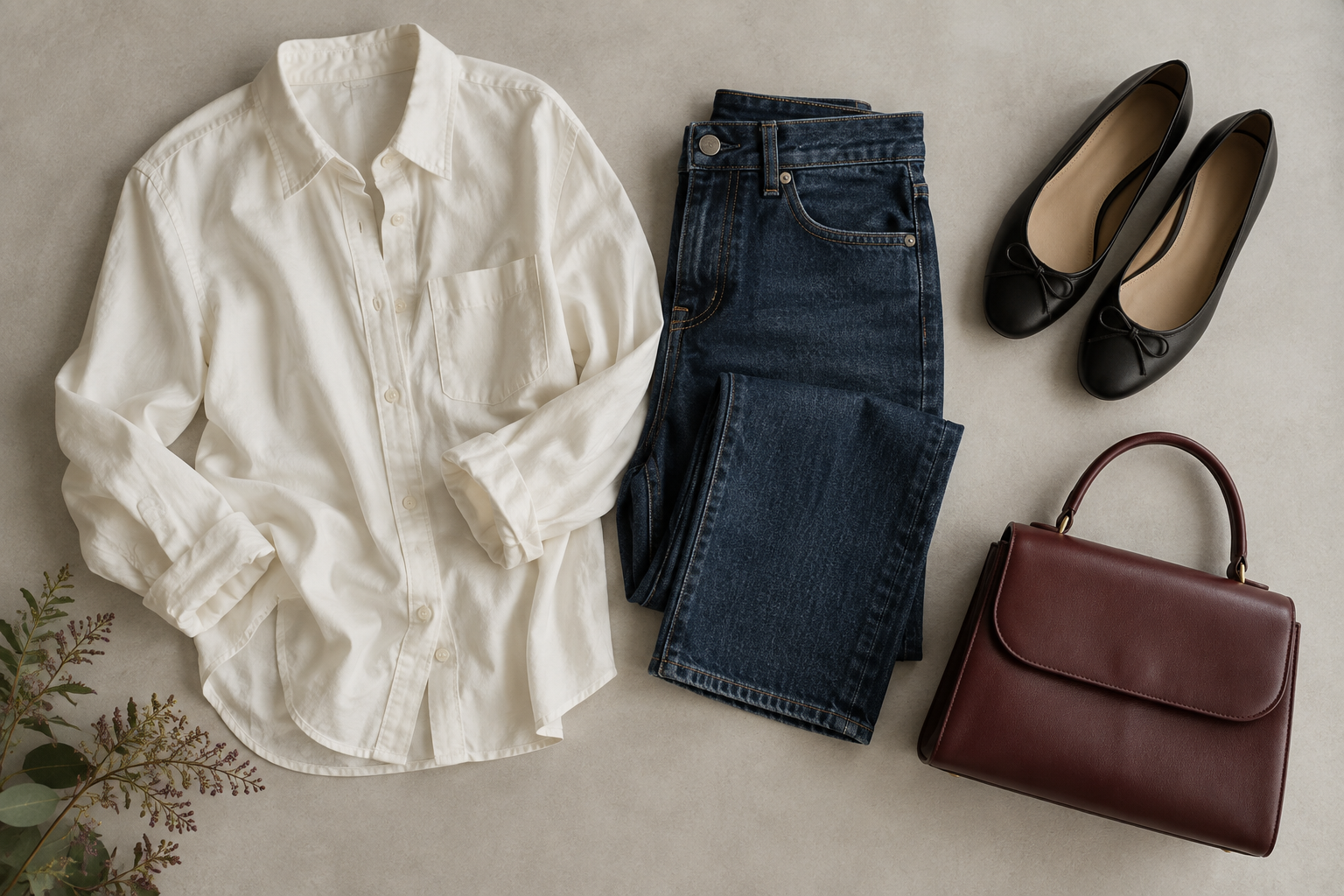
You do not need a complete theory of color to get dressed. Begin with two shades that you enjoy together, whether that is navy and cream, brown and pale blue, or pink and red. Look through clothes you already wear and notice recurring combinations. A pattern can help: a scarf or striped shirt may contain a ready-made palette. Choose two colors from it and see how they behave elsewhere in the outfit.
Decide where the attention goes
A bright piece often feels different depending on how much of it is visible. A red bag against a quiet outfit creates a small focal point; a red coat changes the entire composition. Try the same color in a smaller area if a larger piece feels unfamiliar. You can also turn the idea around and wear more of a color you love, with accessories that blend in. The size of the color area is another styling choice.
Compare contrast, not just color names
Two shades of blue can look very different when one is pale and the other deep. Try a lighter top with darker trousers, then reverse the balance if you have similar pieces. A low-contrast outfit can feel continuous; a stronger contrast gives the separate pieces more definition. Neither is inherently more flattering. The useful question is whether the combination creates the mood you wanted and feels like something you would actually wear.
Use texture when shades are close
Near-matching colors do not have to be exact. Cream cotton beside an ivory knit can look intentional because the surfaces differ. If two almost-identical pieces seem awkward together, add a clearer difference through texture or another color. Check them in the light where you will wear them, since an indoor lamp can change how you perceive a shade. Photos are useful for comparison, but they do not always reproduce color faithfully.
Keep your own short list
Write down three combinations that made getting dressed easier. Include ordinary favorites as well as experiments. On a busy morning, use that list as a starting point and change only one element. On a slower day, try a pairing that interests you without requiring yourself to like it. Personal style develops through noticing your preferences. A color rule is only useful while it helps you make choices.
AI-assisted editorial article. Styling suggestions are subjective. Read our editorial policy.